

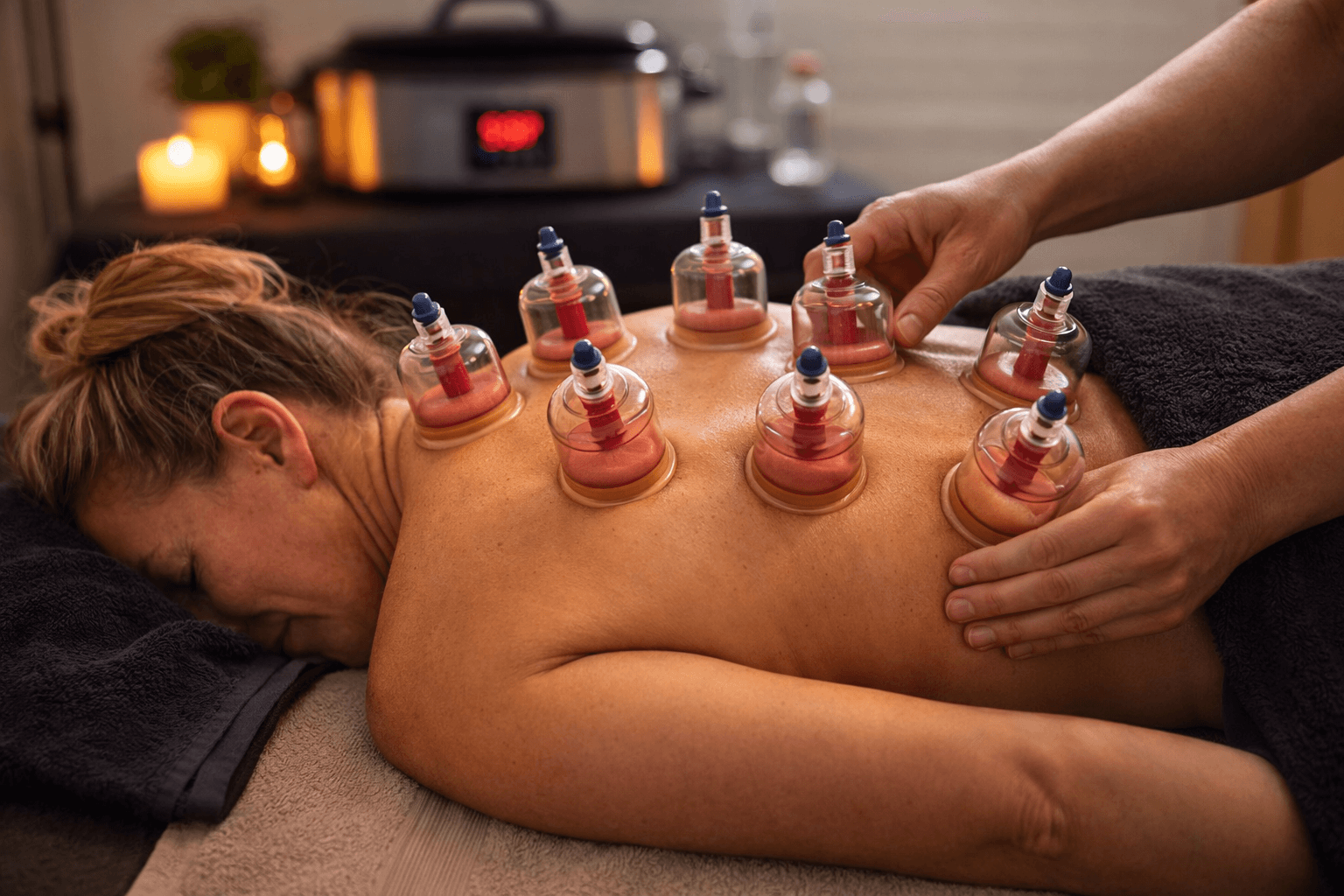
If you’re carrying stubborn muscle tightness, restricted movement, or training-related soreness that doesn’t fully shift with standard massage alone, Cupping Therapy can be a powerful add-on. At Michelle’s Therapeutic & Sports Massage, we use safe, professional cupping techniques to help support circulation, tissue mobility, and recovery—often leaving you feeling lighter and less “bound up” through problem areas.
What is Cupping Therapy?
Cupping is a soft-tissue technique where a cup creates gentle suction on the skin. This suction lifts the superficial tissues and may help:
- increase local blood flow
- reduce the feeling of tightness
- support soft tissue glide and mobility
There are different styles of cupping. In massage and myotherapy settings, dry cupping and myofascial (moving) cupping are commonly used. Myofascial cupping involves gliding cups over the body using negative pressure, a technique described by Massage & Myotherapy Australia in professional education resources.
Why clients love cupping (benefits it may support)
Cupping therapy may support:
- Relief of muscle tightness and “knots”
- Pain support for some musculoskeletal conditions
- Recovery support for active bodies
- Many athletes and gym-goers use cupping to support recovery and mobility—especially during heavy training blocks.
Important: Research quality and outcomes vary across conditions and study designs, and cupping is not a substitute for medical assessment for persistent or severe pain.
Cupping + Massage: a high-value combination
Many clients get the best outcome when cupping is integrated into a structured session:
- Sports Massage + Cupping for training load, heavy legs, tight hips
- Remedial Massage + Cupping for stubborn knots and restricted tissues
- Therapeutic Massage + Light Cupping for stress-related tension patterns
What to expect after cupping
Cupping marks are normal
Cupping commonly leaves circular marks that look like bruises. These are typically temporary and can last several days depending on your skin sensitivity and the suction used. Medical references note that the ecchymosis (cupping marks) can resemble bruising and is an expected effect.
Sensation during and after
- You may feel pulling/tightness during treatment.
- Mild tenderness is possible for 24–48 hours, especially after stronger suction.

When cupping may NOT be suitable (safety first)
Cupping is generally low-risk when performed appropriately, but it isn’t for everyone. It should be avoided or modified if you have:
- broken, irritated, or infected skin
- significant bruising you’re trying to protect
- bleeding/clotting disorders or you are on anticoagulants
- certain medical conditions affecting skin integrity or healing
Medical references also note potential risks such as bruising and (rarely) skin infection, and describe evidence as mixed depending on the condition being treated.
If you’re unsure, tell Michelle before treatment—we’ll screen appropriately and choose the safest option.
If you want a targeted approach to tightness, restricted movement, or recovery support, cupping may be a great fit.
Book online now or contact Michelle to discuss whether cupping is suitable for you.
.